Sunday, 10 July 2011

Contested Will by James Shapiro

Contested Will: Who Wrote Shakespeare by James Shapiro (Simon and Schuster 2010)

I used to be what I guess you could call a casual Baconian. Without having read into the authorship debate in the slightest it was quite easy to pick up on casual  references in the media. It was also a good flight of fancy to imagine the man who essentially invented the scientific method could also be the genuine source of what is the jewel in England's cultural crown. However, thanks to James Shapiro's book I am now pretty firmly of the belief that the glovers' son from Stratford was the true author of the plays.

In the book Shapiro examines the arguments for two of the leading candidates in the authorship debate, Francis Bacon and Edward De Vere, the Seventeenth Earl of Oxford. Only when you study the arguments for these guys do you realise how nonsensical they are. Arguments that William Shakespeare didn't write the plays attributed to him (authorship which had not been challenged until the late Eighteenth Century) are based on the assumption that to have written the plays the author must have been a nobleman, familiar with the law and life in the Elizabethan court, with a university education, attributes, from what the documentary evidence indicates, that certainly cannot be applied to the glovers' son from Stratford. This would only be true if in the writing the plays the author was being autobiographical and wrote from experience never mind the fact that Elizabethan autobiography essential didn't exist outside ecclesiastical writings.

Finally Shapiro makes the argument for Shakespeare himself, detailing references to Shakespeare by contemporary authors such as Ben Jonson and recent textual studies into co-authorship, including five of Shakespeare's last ten plays, which strongly undermines the Oxfordian case. When asked why the authorship question is important, because no matter who wrote them we still have the plays Shapiro makes the interesting point that it does matter because by searching for a more suitable author we do great injustice to Shakespeare's most powerful tool, his imagination.

This is the second book by Shapiro I've read, the first was the Samuel Johnson award winning '1599 A Year in the Life of William Shakespeare' and as with this book the concept was really interesting but the execution was just a little bit too academic for popular appeal and it took me quite a while to get through this rather slim book. That said, the subject matter really is interesting and if you've every wondered about the Shakespeare authorship question then this is probably as balanced and even-handed a take on it as you'll ever find especially now that the Oxfordian movement goes from strength to strength.

4/5

Thursday, 7 July 2011

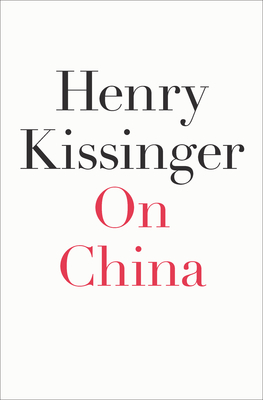
On China by Henry Kissinger

On China by Henry Kissinger (Allen Lane 2011)

Before 1969 the People's Republic of China and USSR were seen as one large Communist bloc whose power centre was in Moscow however as 1969 rolled around and Russian troops massed on the Chinese border, nuclear war between Russia and China appeared probable (so much so that Chinese leaders were dispersed from Beijing around the country). At this point President Nixon decided that Russia was the worse of the two evils which made possible a heretofore unlikely meeting with Chairman Mao in 1972 and a relatively stable period of peaceful co-existence has existed between the USA and China since.

Henry Kissinger was the National Security Advisor to Nixon and was a key figure in setting up the meeting between the unlikely bedfellows. His book charts the history of China from its ancient origins, commenting on the nature of Chinese society and its early belief in its own superiority in the world, not in a proselytizing or crusading manner as one thinks of the neo-con crusade for the democratisation of the third world, but through sheer confidence in ones cultural superiority. And this confidence was badly shaken following the opium wars with the UK with one embarrassing concession after another to host of Western nations on trade, diplomatic relations and even ownership of Chinese lands.

It deals with the civil war that led to the Communist victory (the nationalists escaping to settle what is now known as Taiwan) as well as successive Communist policy blunders such as the Great Leap Forward, an aim to increase industrial output rapidly to overtake the West in 15 years with goals so unrealistic that local officials faked their grain figures which were then relied upon as Mao sold off much of China's remaining grain to Russia in exchange for weapons triggering a famine that killed as many as 45 million people. There is also the Cultural Revolution, part of Mao's vision of continual revolution, an attempt to wipe out all traces of China's Confucian inspired civil service in which many senior mandarins were removed from their positions and sent to labour in the fields, including in their ranks the future leads of the country Deng Xiaoping and Jiang Zemin and very nearly Mao's right hand man Zhao Enlai.

The book is a very useful grounding in modern Chinese political history and it is interesting to observe Chinese foreign policy from the viewpoint of a game of Wei Qi in which two players place down respectively black and white tiles, the object being to encircle ones enemy. Kissinger is at some times almost an apologist for Mao and whilst some of the worst excesses are noted, more effort is put into understanding his decisions in the framework of Chinese history. An explanation for the softer tone towards Mao could be to lesson the burden of being the man to have established relations with a man responsible for more that 45 million deaths.

Henry Kissinger is very much a Republican and top marks to American forgeign policy go to Nixon, Reagan and both Bushes. Clinton and Carter are both criticised as being too gun-ho about trying to spread and apply Western values in a Chinese context.

Whatever the problems with this book I would certainly recommend it as an introductory book on Modern China because it is one that will make you want to read more.

4/5

Smut by Alan Bennett

Smut: Two Unseemly Stories by Alan Bennett (Faber & Faber/Profile Books 2011)

In this rather slight volumes sit two charming stories of unexpected sexuality. The first story is 'the Greening of Mrs Donaldson' and deals with a recently widowed middle-classed woman who to earn some extra income on the side takes a job at the local hospital as a part-time demonstrator helping medical students with their diagnosis technique by feigning different physical and mental conditions and at the same time catching the eye of their professor. As she takes in a couple of students as tenants she finds herself in an interesting predicament as the rent cheques begin to dry up there is an offer to pay the arrears in kind.

The Shielding of Mrs Forbes features another unorthadox sexual arrangement. Mrs Forbes has a handsome, eligible if not air-headed son called Graham and he is betrothed to a somewhat plain but extraordinarily intelligent woman. They would be set for a happy life if it weren't for the fact that Graham was a closeted homosexual whose extra-marital sexual encounters get him under the control of a blackmailing policeman.

Both stories are about people pretending to be whom they are not and failing miserably at the task. Both stories lead to rather unexpected conclusions and the brunt of the humour is rather directed not at the named protagonists themselves but at the people around who are in on the secret.

It's a slender volume and the stories are entertaining enough but it does leave me wondering  if they were of sufficient calibre to justify individual publishing. I think Alan Bennett has reached the same level as Umberto Eco where anything he says or writes from now on will be snapped up and bound which is great if you're an avid fan eager for new material but it is no guarantor of continuing or consistent quality.

3/5

Sunday, 5 June 2011

The Age of Wonder by Richard Holmes

The Age of Wonder: How the Romantic Generation Discovered the Beauty and Terror of Science by Richard Holmes (Pantheon 2009)

June 24th 1833 was the date when the word 'scientist' was arguably coined. At a meeting for the British Association for the Advancement of Science, William Whewell was addressing the packed Senate House on the nature of science when the applause died down one sole figure remained standing, and to the surprise of everyone present, it was that of the Romantic poet Samuel Taylor Coleridge. He remarked of the members present in the room that the name they used for their profession was no longer appropriate, men knee deep in mud searching for fossils being called 'natural philosophers' didn't quite seem right and the other moniker 'men of science' hardly included the likes of Caroline Herschel; something better had to be devised. As an actual metaphysician himself Coleridge wanted a name that would more reflect the practical and hands-on nature of their work. Whewell's suggestion was that one could by analogy of art to artist go from science to scientist and thus the word was born.

This book deals with how we progressed from the pure philosophy of the inductive reasoning of Bacon and Newton and the rationalism and foundationalism of Descartes, through the independently wealthy and crown sponsored men of Royal Society to the more familiar profession of science of Whewhell, Charles Darwin and beyond. At the heart of this book are biographies of three of the guiding lights of Romantic science. The first is of Sir Joseph Banks whose botanical voyages in Tahiti with Captain Cook opened his eyes to a world of experience and adventure which, when he himself was crippled by gout and unable to travel, encouraged in others as the President of the Royal Society. The second is William Herschell and his redoubtable sister Caroline who brought skill, ingenuity and a complete thoroughness to the science of astrology through regular nightly sweeps of the sky and better telescopic technology that helped them discover Uranus and two of its moons as well as two moons of Saturn and a catalogue of over 500 new nebulae. Finally we meet Sir Humphry Davy and his experiments with gases and electricity that made him a veritable rock star.

Part of what makes this period so exciting is that the arts and sciences had an almost symbiotic existence. Erasmus Darwin and Humpry Davy both composed poetry whilst the likes of Coleridge, Wordsworth and Shelly wrote pamphlets on science and natural philosophy. It was a synthesis that was mutually beneficial which makes me think that Stephen Hawking was all the more wrong when in his most recent book 'The Grand Design' he made the pronouncement that 'philosophy is dead' a somewhat ironically self-defeating philosophical stance.

It was an exciting period in history, the exploration of Africa and the islands of the South Pacific. The advent of flight with the early experiments in Ballooning. There was also an exciting cast, not just the poets and triumvirate of scientists mentioned above but the likes of Michael Faraday, Thomas Beddoes, Mungo Park and the rest. Holmes infuses the narrative with his own sense of wonder and as the book ends with Charles Darwin heading off on the HMS Beagle he leaves us wanting to know what comes next.

5/5

Saturday, 4 June 2011

Nothing to Envy by Barbara Demick

Nothing to Envy: Ordinary Lives in North Korea by Barbara Demick (Spiegel & Grau 2009)

'We have nothing to envy in the world' go the lyrics to a song taught by Mi-Ran (she plays the accordion which is as we learn something that all teachers in North Korea are required to do because they are lightweight, cheap and music is a good tool for indoctrination) to a class of five and six year old children whom starvation has made look three or four and whose attendance numbers have ominously dropped down from fifty to fifteen.

'If you look at a satellite photo of the Far East at night, you'll see a splotch curiously lacking light' this Barbara Demick informs us is the Democratic People's Republic of Korea. In this darkness Mi-Ran and Jun-Sang can avoid the eyes of nosy neighbours by walking down the pitch-black streets unseen. Mi-Ran is from the lowest caste in North Korean society (beulsun - literally tainted blood) , her father was a soldier from the South taken prisoner by the North during the Korean War and with no hope of repatriation his family are forever condemned to the bottom rung. Jun-Sang is of an impeccable background and his good marks in chemistry mean that he has a future at one of the military universities in Pyongyang, the showtown capital of North Korea and a union with a beulsun would ruin his prospects.

Demick follows the lives of six protagonists from the same town, Chongjin and through them we experience vignettes of life in a country that has become a virtual black hole of information. We hear of infrastructure shutting down as people are no longer paid for their work and where a much more productive use of time is foraging for food, first rations from the government, then dogs and cats in the neighbourhood, then rats and mice and finally whatever plants and roots that can be boiled and made edible. The scale of privation is sometimes overwhelming but the book offers light at the end of the tunnel as the six escape to tell their stories.Although not every escape story is a success and China is all to willing to hand escapees back over to the Pyongyang regime where labour-camps and worse await their return.

North Korea is often in the news for its sabre-rattling nuclear experimentation. What this book so brilliantly does is to pierce the veil of secrecy they have erected and give insight into the lives of everyday people and one has to wonder how life can still exist like this in a world of such plenty.  Very compelling.

5/5

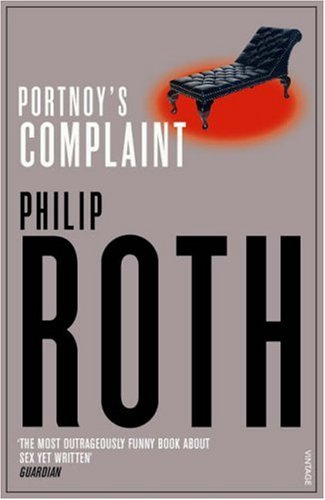
Portnoy's Complaint by Philip Roth

Portnoy's Complaint by Philip Roth (Random House 1969)

Philip Roth's fourth book, Portnoy's Complaint was the one that made his reputation for the man who is now the newly crowned Booker International Prize winner and who has been long touted for the Nobel Prize for literature. The book is a flowing and humorous monologue by Alexander Portnoy to his virtually silent psychoanalyst. It is a venerable tour de force of New Jersey Jewish neurosis and guilt.

Portnoy's complaint is an odyssey of sexual addiction. His early onanistic habit kept him locked in the toilet so frequently that he had to invent diarrhoea as an excuse, for which his high-strung mother assumes is caused by his eating fries instead of coming home to a hearty meal and which in one scene his eternally constipated father, jealous of Alex's free-flowing bowels, hammers at the door demanding to see evidence in the toilet bowl (a very funny scene which is parodied in the Simpsons where a young Krusty the Clown is caught practising clowning in the toilet by his overbearing Rabbi father).

As Portnoy matures, well at least ages, we see a succession of girlfriends and ever more bizarre sexual antics. A full-bodied but flat chested woman he calls the pumpkin, an emotionally stilted but sexually adventurous woman he calls the monkey and finally a Jewish woman he meets in Israel who resembles his mother but whom finds him somewhat repugnant.

It could be very easy to dismiss this book as just literary pornography but Roth uses sex to examine deeper themes, history, culture, identity, family. Themes he continues to develop in his later works such as American Pastoral and the Plot Against America, all told from Jewish characters living in or around New Jersey. I'd say for this reason that he is almost an American Mordecai Richler just a damn site dirtier.

I said that the psychoanalyst was almost silent, he has one line, the last one: 'So [said the doctor]. Now vee may to perhaps begin. Yes?'. Funny but don't let anyone read it over your shoulder!

4/5

How to Live by Sarah Bakewell

How to Live: A Life of Montaigne in One Question and Twenty Answers by Sarah Bakewell (Vintage 2011)

Michel Eyquem de Montaigne was born in 1533. His early education was entirely in Latin leaving him with little way to communicate with his family except through the shaky Latin of his father and conversational Latin of his servants. He lived in a tower overlooking his estate,  was a magistrate and sometime mayor of Bordeaux. It is hard to see how lessons on life from this mediaeval French philosopher can be relevant to a modern audience and yet throughout the centuries many people have read the Essays and seem themselves in their pages for the simple reason that he is so brutally honest and open about his life that one begins to look on Montaigne as a friend. We learn about his bowel  movements, his sexual exploits, what food he likes and about his relationship with his cat.

Montaigne was a true man of the Renaissance. Carved into the roof of his library were maxims of his Greek and Roman heroes, Cicero, Seneca, Virgil  and Socrates et al. His philosophy melded the Hellenic schools of Scepticism, Epicurianism and Stoicism holding key the two key principles that unite them all, eudaimonia, the pursuit of a good life and that of ataraxia, having a tranquillity of the mind. This means not being overcome by extreme emotions, and preparing oneself mentally for all the pitfalls life can offer, meeting them with a level head.

Bakewell's unconventional approach to biography pays off as one can see how fond she is of her subject, a trait which is quite contagious. Whilst Montaigne's philosophy can appear to be cold and unemotional, you can see that he is trying to save us from emotional pain, perhaps of the kind he underwent himself when he lost the closest friend of his life, his soul mate Etienne de la Boetie to the plague. But the highest compliment that can be paid to this book is that it makes you want turn to its source, the Essays themselves and for that reason alone I feel I can highly recommend this book.

5/5