Showing posts with label Politics. Show all posts

Wednesday, 27 July 2011

David Lloyd George by Roy Hattersley

David Lloyd George: The Great Outsider by Roy Hattersley (Little Brown 2010)

Last summer I spent a while researching whether there were any decent biographies of Lloyd George. I have his multi-volume War Diaries purchased in a moment of financial whim in a charity shop in Preston, Lancs but if you were looking for a comprehensive take on Lloyd George's life, then last summer there was not one to be found. This is interesting in itself, David Lloyd George was the man who lead Great Britain to victory in the Great War surely, as with Churchill, there should have been dozens of titles. Part of the reason for this one wonders may have to do with how the book came to be written. Roy Jenkins, the stalwart of British political Biography whose titles include Gladstone, Asquith, Baldwin and Churchill, suggested to Roy Hattersley that he write the biography because he disliked Lloyd George 'so heartily that he could not write the book himself'

Money played an important part in Lloyd George's life and it was probably the lack of it in childhood that made him so desirous of it in later life. Born in Manchester he spent most of his childhood in North Wales, the country with which he would be so closely associated with. His later financial dealings nearly ruined his career as with his disastrous gold mining operations in Argentina where he continued to solicit investment even after he was aware there was no gold, and the Marconi scandal where a number of cabinet ministers were involved in speculating in the share value prior to the awarding of a large government contract. It was the issue of money that finally ended his run as Prime Minister when the extent of his involvement in selling honours became known.

After receiving the reputation of being something of a womaniser (a reputation that later led to his nickname of 'the goat'), at the age of 21 Lloyd George realised that he needed a woman who could provide 'the stability of indomitable domesticity'. The woman was Margaret Lloyd George (nee Owen). They stayed together until her death in 1944 although he was hardly faithful. In 1910 he met Frances Stevenson when she was hired as the childrens' tutor. She became Lloyd George's mistress and was to remain with him until his death, becoming the second Mrs Lloyd George following Margaret's death in 1944.

I said that Lloyd George was the man who lead Great Britain to victory in the Great War but he should be remembered for far more than that. He was the man who essentially started the modern welfare state by introducing state pensions and employment insurance, the man who strengthened British democracy by forcing the House of Lords into breaking a constitutional convention which led to the Parliament Act 1911 that limited the power of the unelected Lords to a suspensory veto. He is also a man to be remembered for two wars.  For his vehement opposition to the Boer War (that almost made him the most unpopular man in the country) to his stalwart leadership during the First World War. There is so much more to say about his achievements but my prĂ©cis would be a poor substitution to reading the book itself.

Roy Jenkins book is an interesting one. He tries to be dispassionate about Lloyd George and I think like me he genuinely admires what he achieved but with each chapter you sense a growing dislike of the person. His treatment of his wife although mitigated by the fact that she refused to leave her native Leeds to join him in London, cannot be condoned. The book could have done with a concluding chapter just to sum up his thoughts on the man but sadly all we are given is half a paragraph. Otherwise this was a thoroughly interesting book on a very interesting period in British politics and I highly recommend it.

5/5

Thursday, 7 July 2011

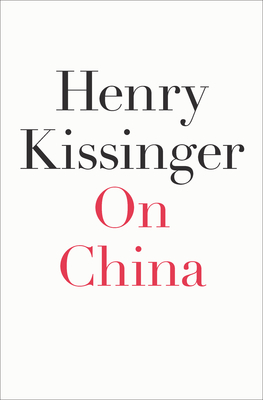
On China by Henry Kissinger

On China by Henry Kissinger (Allen Lane 2011)

Before 1969 the People's Republic of China and USSR were seen as one large Communist bloc whose power centre was in Moscow however as 1969 rolled around and Russian troops massed on the Chinese border, nuclear war between Russia and China appeared probable (so much so that Chinese leaders were dispersed from Beijing around the country). At this point President Nixon decided that Russia was the worse of the two evils which made possible a heretofore unlikely meeting with Chairman Mao in 1972 and a relatively stable period of peaceful co-existence has existed between the USA and China since.

Henry Kissinger was the National Security Advisor to Nixon and was a key figure in setting up the meeting between the unlikely bedfellows. His book charts the history of China from its ancient origins, commenting on the nature of Chinese society and its early belief in its own superiority in the world, not in a proselytizing or crusading manner as one thinks of the neo-con crusade for the democratisation of the third world, but through sheer confidence in ones cultural superiority. And this confidence was badly shaken following the opium wars with the UK with one embarrassing concession after another to host of Western nations on trade, diplomatic relations and even ownership of Chinese lands.

It deals with the civil war that led to the Communist victory (the nationalists escaping to settle what is now known as Taiwan) as well as successive Communist policy blunders such as the Great Leap Forward, an aim to increase industrial output rapidly to overtake the West in 15 years with goals so unrealistic that local officials faked their grain figures which were then relied upon as Mao sold off much of China's remaining grain to Russia in exchange for weapons triggering a famine that killed as many as 45 million people. There is also the Cultural Revolution, part of Mao's vision of continual revolution, an attempt to wipe out all traces of China's Confucian inspired civil service in which many senior mandarins were removed from their positions and sent to labour in the fields, including in their ranks the future leads of the country Deng Xiaoping and Jiang Zemin and very nearly Mao's right hand man Zhao Enlai.

The book is a very useful grounding in modern Chinese political history and it is interesting to observe Chinese foreign policy from the viewpoint of a game of Wei Qi in which two players place down respectively black and white tiles, the object being to encircle ones enemy. Kissinger is at some times almost an apologist for Mao and whilst some of the worst excesses are noted, more effort is put into understanding his decisions in the framework of Chinese history. An explanation for the softer tone towards Mao could be to lesson the burden of being the man to have established relations with a man responsible for more that 45 million deaths.

Henry Kissinger is very much a Republican and top marks to American forgeign policy go to Nixon, Reagan and both Bushes. Clinton and Carter are both criticised as being too gun-ho about trying to spread and apply Western values in a Chinese context.

Whatever the problems with this book I would certainly recommend it as an introductory book on Modern China because it is one that will make you want to read more.

4/5

Saturday, 4 June 2011

Nothing to Envy by Barbara Demick

Nothing to Envy: Ordinary Lives in North Korea by Barbara Demick (Spiegel & Grau 2009)

'We have nothing to envy in the world' go the lyrics to a song taught by Mi-Ran (she plays the accordion which is as we learn something that all teachers in North Korea are required to do because they are lightweight, cheap and music is a good tool for indoctrination) to a class of five and six year old children whom starvation has made look three or four and whose attendance numbers have ominously dropped down from fifty to fifteen.

'If you look at a satellite photo of the Far East at night, you'll see a splotch curiously lacking light' this Barbara Demick informs us is the Democratic People's Republic of Korea. In this darkness Mi-Ran and Jun-Sang can avoid the eyes of nosy neighbours by walking down the pitch-black streets unseen. Mi-Ran is from the lowest caste in North Korean society (beulsun - literally tainted blood) , her father was a soldier from the South taken prisoner by the North during the Korean War and with no hope of repatriation his family are forever condemned to the bottom rung. Jun-Sang is of an impeccable background and his good marks in chemistry mean that he has a future at one of the military universities in Pyongyang, the showtown capital of North Korea and a union with a beulsun would ruin his prospects.

Demick follows the lives of six protagonists from the same town, Chongjin and through them we experience vignettes of life in a country that has become a virtual black hole of information. We hear of infrastructure shutting down as people are no longer paid for their work and where a much more productive use of time is foraging for food, first rations from the government, then dogs and cats in the neighbourhood, then rats and mice and finally whatever plants and roots that can be boiled and made edible. The scale of privation is sometimes overwhelming but the book offers light at the end of the tunnel as the six escape to tell their stories.Although not every escape story is a success and China is all to willing to hand escapees back over to the Pyongyang regime where labour-camps and worse await their return.

North Korea is often in the news for its sabre-rattling nuclear experimentation. What this book so brilliantly does is to pierce the veil of secrecy they have erected and give insight into the lives of everyday people and one has to wonder how life can still exist like this in a world of such plenty.  Very compelling.

5/5

Wednesday, 26 May 2010

Gladstone by Roy Jenkins


Gladstone by Roy Jenkins (Pan Books 1995)

Other than Queen Victoria herself, William Ewart Gladstone is probably the persons who defines the Victorian period. Four times Prime Minister (a record so far unmatched and very unlikely to be matched in the years to come) in a career spanning 1832-1895.

After the typical Prime Ministerial education of Eton and Oxford, Gladstone first made his mark on the world in a fiercely conservative tome 'The State in its Relationship with the Church' in which he argued that membership in the Church of England should be prerequisite for anyone who wished to serve in public life and that the aim of the nation should be to uphold the principles of the Church (it is something of an irony that Gladstone was the man to bring about the disestablishment of the Church of Ireland and argued for the same in Scotland and Wales). Lord Attlee described Gladstone as being a 'frightful old prig' for his religiosity particularly in relationship to his proposal to his wife. 'Fancy' he said 'writing a letter proposing marriage including a sentence of 140 words all about the Almighty. He was a dreadful person'.

Gladstone was first elected as MP for Newark in a semi-rotten borough and supported by a local duke, hardly a democratic start. His first major oration in the House of Commons was rather surprisingly pro-slavery with a defence of the negro apprentice schemes on the West Indian plantations, talking for over two hours (a pretty standard length for a Gladstone oration). Gladstone had a pretty amazing career prior to taking the highest office serving as Chancellor of the Exchequer in successive governments effectively he was the man who made the job what it is today. Jenkins argues that 'Churchill would have been little more than a footnote to history had he died on the threshold of his premiership. This would certainly have been true of Salisbury had he gone in 1886, or of Macmillan had he done so in 1956...but such obscurity would not have been the fate of Gladstone had he died instead of becoming Prime Minister in 1868.

On being told that the Queen had requested Gladstone to form his first government he uttered the immortal phrase 'my mission is to pacify Ireland' and his Irish policy was to dominate all four of his premierships. In his first premiership Gladstone managed to enact legislation disestablishing the Church of Ireland, reforming land rights and access to the Irish universities however it was the decisive issue of Home Rule which thwarted his attempt to bring peace to that land and caused somewhat irreparable divisions within the Liberal party (which were later blown apart in the power struggle between Asquith and Lloyd George) as the Whigs deferred to the Conservatives in large numbers.

Gladstone was such a strange man. In his earlier years his passion was to rescue prostitutes, a pursuit to which he devoted a large amount of his time and energy spending many hours talking to these women about religion, even when he was in high office. Whilst these activities no doubt expressed some sexual repression for which Gladstone punished himself (an act his diary either noted as 'the scourge' or was annotated with mark that looked rather like a little whip) there is no reason to believe that his actions were nothing short of moral and charitable although one cannot imagine a politician today being able to act like this and rather speaks to a certain naivity of Gladstone's as well as a firm belief in his own moral rectitude. In later life the rescuing of prostitutes was replaced by an equally bizarre hobby of chopping down trees, a pursuit he encouraged his children to take part in.

Gladstone was a voracious reader and is said to have read some 40,000 volumes throughout his life although his favourites were always the Latin and Ancient Greek classics, Homer, Dante and Horace (his speeches were littered with untranslated Latin and Greek quotations). The sheer volume of books despite having worked the highest offices in Britain shows one of the key Gladstone characteristics which is that he believed himself at war with time and it was his duty to fit as much into a day as he possibly could.

The book is well written from a man who has had his own time as Chancellor of the Exchequer and also his own turn at dividing political parties (as when he fractured the Labour Party to create the short lived Social Democrat Party which eventually merged with the Gladstone's old Liberal Party to form the Liberal Democrat Party). He rather glosses over a lot of the nitty gritty of the different Gladstone premierships however to go into that detail would probably require a book of some number of volumes that I most certainly would not have bought. The book also lacks a summary chapter which would have been nice to tie things up and not end upon the sad note of the Grand Old Man's death.

If you're interested in the politics of Victorian Britain then this book is a must buy.


4/5

Saturday, 8 May 2010

The Audacity to Win by David Plouffe

The Audacity to Win: The Inside Story and Lessons of Barack Obama's Historic Victory by David Plouffe (Viking 2009)

The election of Barack Obama in 2008 looked to be the most amazing upset. As a young and vibrant black senator with negligible experience who would not only have to go in and carry all the states won by John Kerry back in the 2004 election but make inroads into traditionally red states Obama did not seem to have an obvious path to victory. This book shows how the impossible was achieved, not just defeating McCain but triumphing over the other must beat candidate, Hilary Clinton.

Beating Clinton was quite an achievement and nearly the first half of the book is dedicated to the first year spent almost entirely in Iowa building up a phenomenal grass roots base and putting Obama on the map. Winning Iowa would mean building up the momentum that, a long way down the line, finally brought him the nomination. His path to victory was built upon expanding the electorate, registering new voters, appealing to moderate republicans and campaigning in the counties and areas of the states which would maximise his delegate count and thus secure him the nomination.

The book shows Obama to be better organised, better prepared, better disciplined, better financed and running to a better strategy than either Clinton or McCain. There is a lot to admire in the way they fought these campaigns, the grass roots organisations they built up rather than relying on in-state old party king-makers, the use of new media to communicate with members and supporters and often to break news directly to the party first is all commendable. One cannot help but feel that they these are people who know the system and played to the system. Against Clinton the focus of the campaigning was winning the delegates and against McCain it was about playing the board making the best electoral college arithmetic and arrive at the magical number 270. At no point do you feel that winning the popular vote was a real concern and I guess that just means that they were smart but one cannot help but consider the efficacy of an electoral system that would allow the popular vote to be a secondary concern.

A very interesting dose of insight!
4/5

Friday, 23 April 2010

The End of the Party by Andrew Rawnsley

The End of the Party: The Rise and Fall of New Labour by Andrew Rawnsley (Viking 2010)

The Servants of the People published in 2000 chronicled Labour's election and first term in power, this book details everything that has happened since. Rawnsley, political columnist for the Observer, quotes from quite an impressive array of sources as he writes the story of New Labour, 9/11 and the war on terror, the Iraq War and the dodgy dossier that got us there and the financial crisis. It also goes into deep details of the personalities and conflicts between the main protagonists.

Rawnsley comes across as quite Blairite and for him other than when he details the David Kelly affair in which is he quite vitriolic about Blair's involvement, he is portrayed almost as the man who can do no wrong and when things do not turn out as they should, the finger of blame is nearly always pointed at Brown and those in his team who push him into being more extreme than he would be on his own (all of Douglas Alexander, Ed Balls, Ed Milliband and Damian McBride do not come out of this book looking good). In a chapter entitled 'the long goodbye' he details what he sees as the highlights of TB's 13 years in power:

"generous investment in health and education which reversed years of neglect of the public realm. State-funded childcare was introduced alongside the minimum wage. There was considerable redistribution, mainly the work of Chancellor, from the affluent to the poor. Tax and benefit changes since 1997 broadly raise the incomes of the poorest fifth of society. This was not enough to entirely counteract the global forces which were stretching the inequalities and the super-rich continued to pull away from every one else...he left Britain wealtheir and more diverse, but not much happier than how he found it."

The book received a great deal of press pre-publication for the details of Gordon Brown's temper and the book paints him as palpably mad. He is seen as moody, sulking, petty and violent. The reason, it is made to look, that there was no real challenge to Brown for the Labour leadership is that he crushed any promising talent that might challenge what he viewed as his solemn right to govern Britain. He and his team are shown to continually brief and leak against Blair, the content of his budgets were rarely divulged up to a couple of hours before they were announced when they were already at the printers and he is shown to be the worst micro-manager possible.

The book is far from perfect and you are painfully aware that the author is still working with the people he is writing about and so tries to stay away from making personal judgement. However in an election year and despite whatever economic competence he portrays Brown as having you cannot but arrive at the conclusion that Gordon Brown is insane.

An interesting if not biased account.

4/5